CloudSovren · Triton Cloud · 2026
From a repo of APIs to $600K+.
I was tasked with selling more of the hardware Sovren already owned, starting from a repository of APIs. I settled who buys and how they pay before a screen existed, cut the flows from thirteen to ten after sitting with users, and had a prototype in under three weeks.
Sell the hardware we already owned.
Sovren owned the hardware and already ran the software. The mandate: sell more of what we owned, and put what sat idle to work.
What existed was a repository of APIs. No brand, no screens, no agreed word for anything. The platform could already make a machine. Nothing existed that could ask it to.
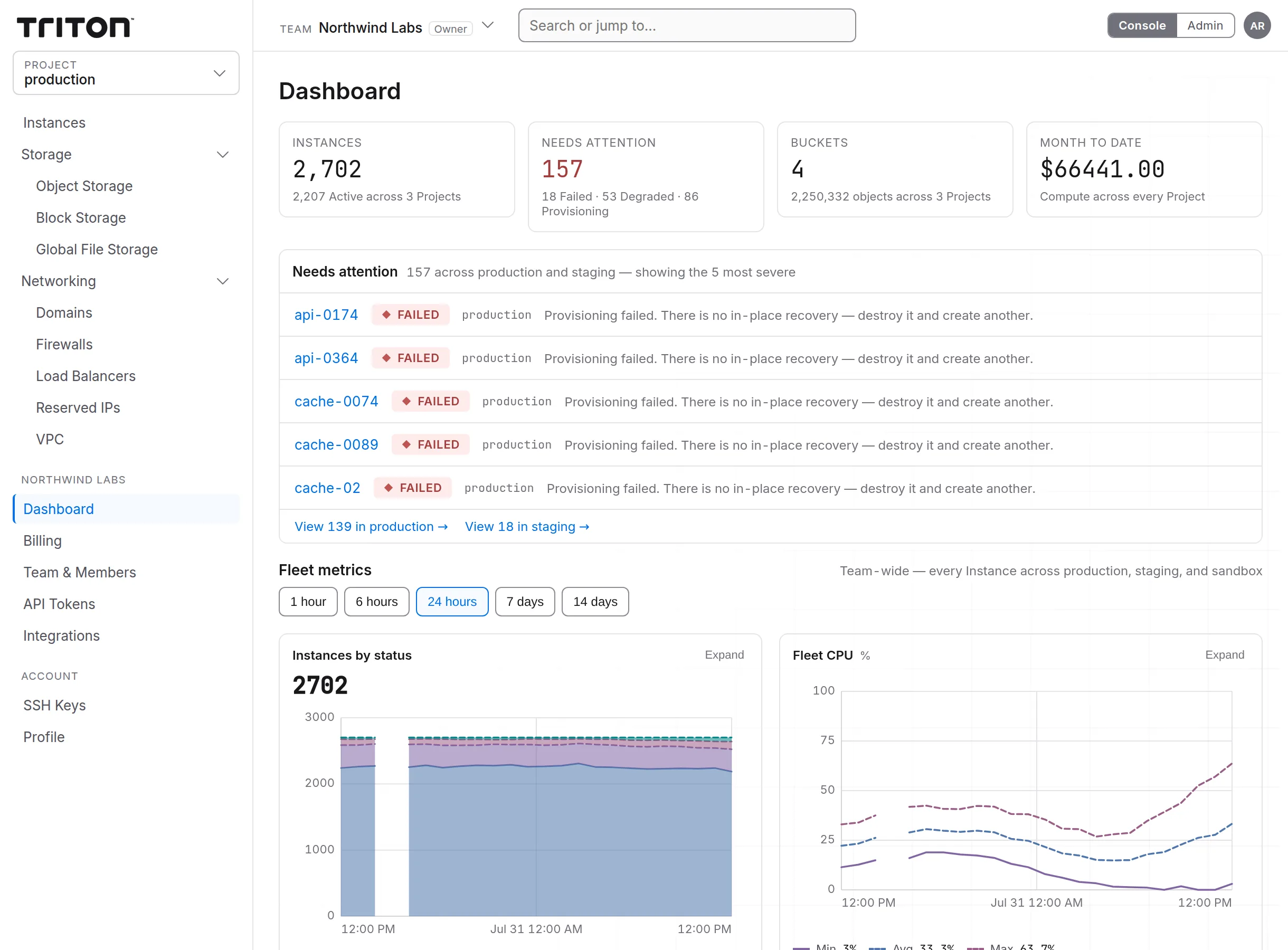
I settled how it made money before I drew a screen.
Who buys, what they pay for, and when. A metered product prices itself on every screen, so those three answers came before layout.
Two buyers want opposite things. A developer wants a machine in the next minute. A company wants to license the platform and run it on its own hardware.
For the developer, I replaced grouped instance families with five flat tiers starting at $5, so pricing a machine never means reading a table. Price sits beside the choice that changes it, and the total is on screen before anything is committed.
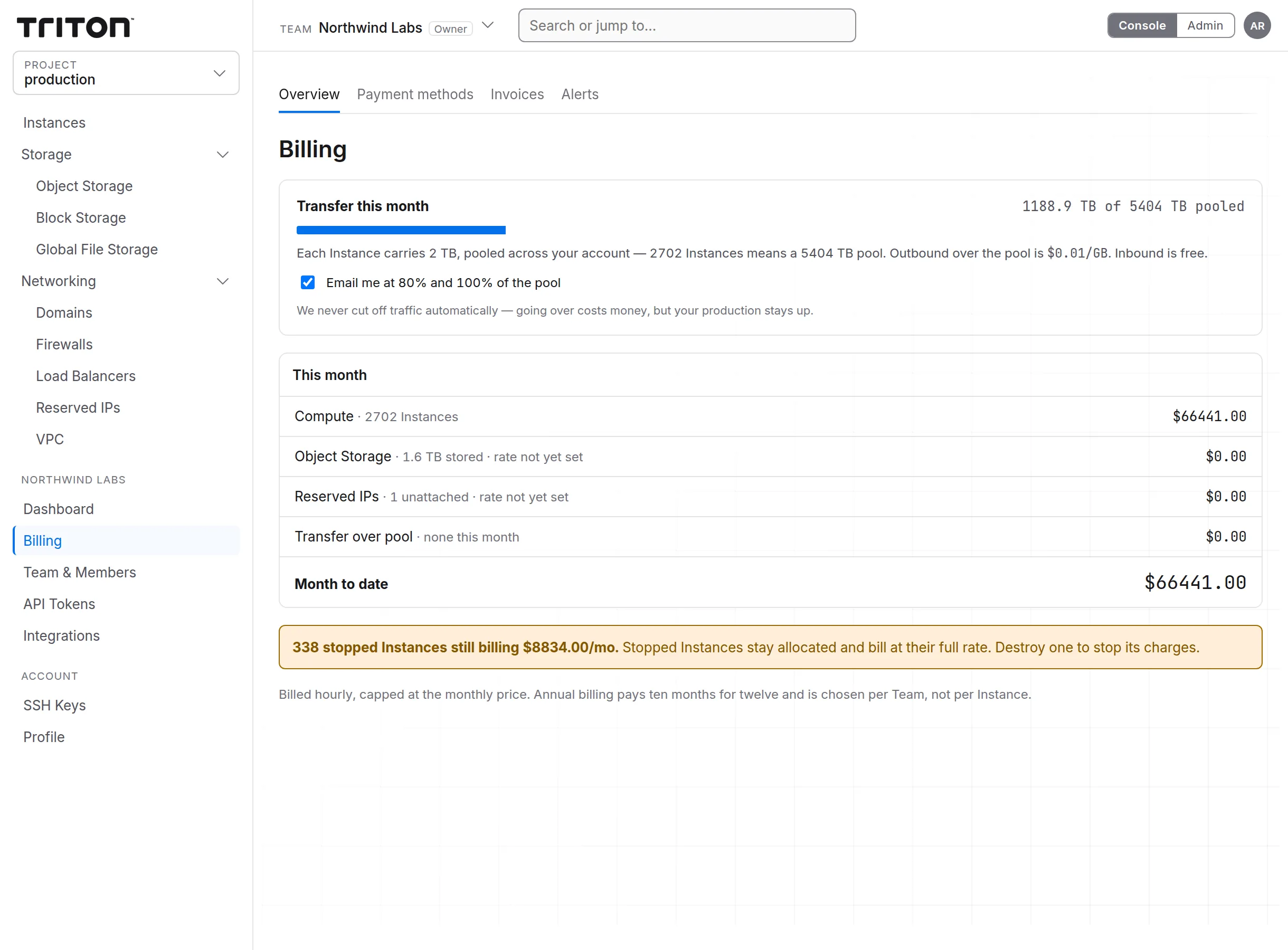
Ten flows, cut from thirteen, after sitting with users.
I studied the three products Triton Cloud would be measured against: two self-serve clouds, for how buying a machine in a browser already feels, and VMware, for what people running their own hardware expect. Then I interviewed users and sat with them through the flows they already run.
That gave the product its shape: ten user flows mapped end to end, cut from thirteen, with errors and blocked states written into each flow instead of left for later. One rule held the scope down. Nothing entered the product because a competitor had it.
Card at sign-up: safer for us, a wall for enterprise.
A growth mandate argues for the lowest wall you can build. I raised one, with the CTO.
Self-serve clouds take a payment method before the first machine starts. Enterprise buyers expect an invoice thirty days later. I could not have both at launch.
- Situation
- A machine that starts before anyone has paid is a machine somebody else pays for, and an open door for abuse.
- Call
- Require a payment method at sign-up, and say why on the screen.
- Cost
- Enterprise buyers meet a card form on the way in, and procurement departments do not carry cards.
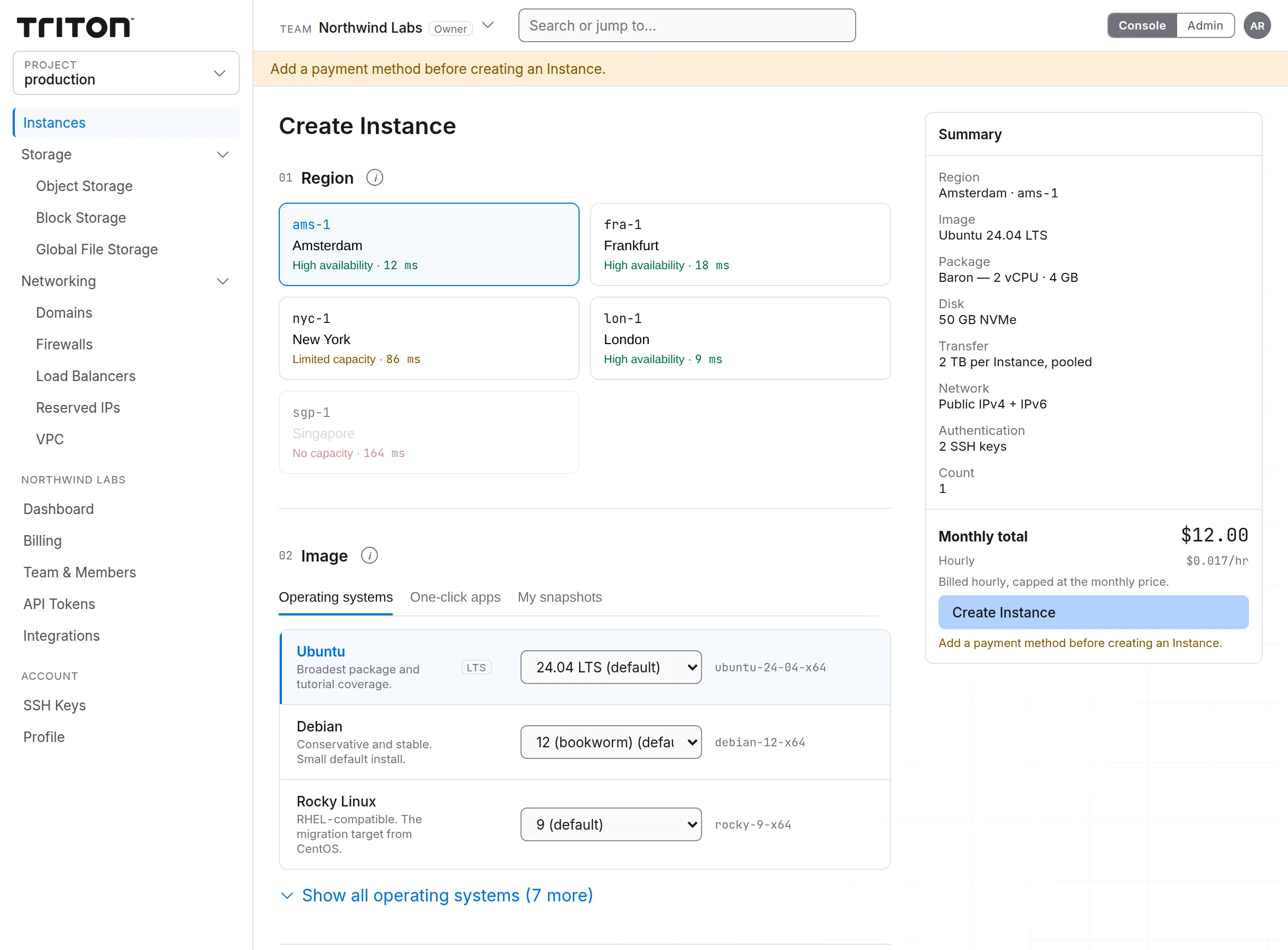
The same console, sold twice.
Once as a hosted product. Once licensed to a company that runs its own hardware and sells to its own customers. The second sale changes the product: a reseller sees their customers and nobody else’s, prices their own catalogue, and hands out roles inside their own boundary.
So I added an operator console beside the customer one, and made VMware import something an operator starts and finishes, not a permanent seat in the navigation.
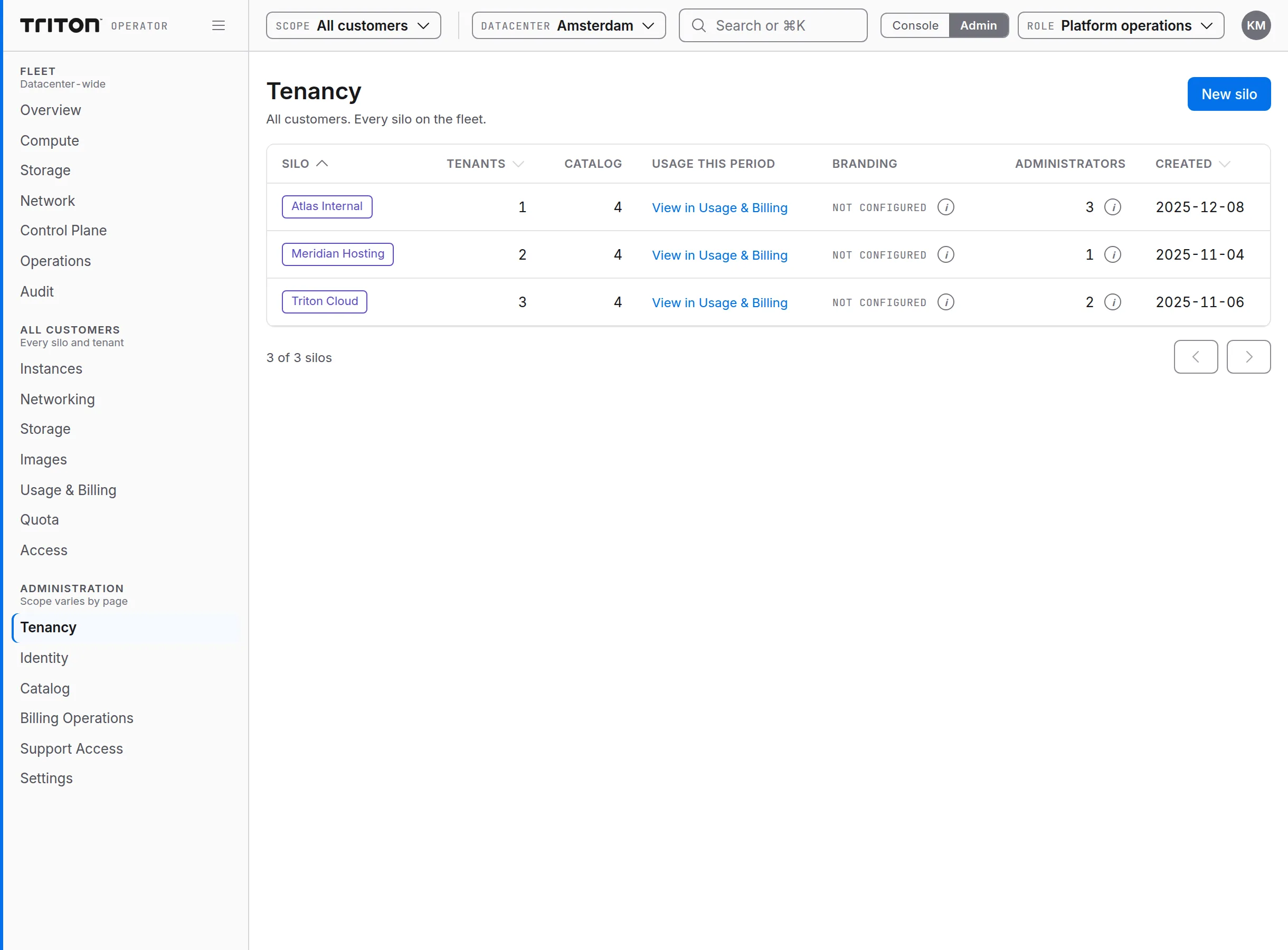
I owned the product and the console. The platform engineers owned the platform.
Mine
- The pricing and packaging, including the five flat tiers.
- The ten flows, and the three that were cut.
- The card wall, decided with the CTO.
- The working prototype, built in code with AI, in under three weeks.
- The console, including the first build of its React and Vite front end, shipped with an engineer. Engineering carried it forward, and I still ship code to it.
- The design system and the marketing site.
Not mine
- The platform: the hypervisor, storage, networking and provisioning, which belong to the platform engineers.
- The billing integration.